China has become a major sourcing base for reliable Milk Frother equipment, serving cafés, hotels, retailers, and private-label brands worldwide. Its manufacturing clusters combine metal processing, plastic molding, motor assembly, and packaging expertise. Yet “made in China” does not automatically mean consistent quality. Buyers must examine evidence.
A practical evaluation starts with the frothing result. A capable Milk Frother should create fine, stable foam without excessive bubbles. During testing, observe the foam after 30 seconds, not only immediately after operation. Check the whisk, shaft, sealing ring, battery compartment, and charging port. Small details matter. A loose lid can damage customer confidence.
Coffee educator David Schomer has often emphasized, “The texture of the foam is more important than its volume.” This principle remains useful when comparing Chinese manufacturers. Suppliers should explain motor speed, food-contact materials, temperature limits, noise levels, and expected service life. They should also provide factory photographs, test reports, sample units, and clear warranty terms. Certifications may support credibility, but buyers still need independent verification.
The best manufacturers usually communicate precisely. They clarify minimum order quantities, sample charges, customization limits, lead times, and replacement policies before payment. Experienced buyers should request identical samples from several factories. Differences may appear in foam density, vibration, battery endurance, or cleaning convenience. No supplier is perfect. Even a promising factory may overlook one detail during mass production. That is why pre-shipment inspection and written specifications are essential. This guide introduces China’s leading Milk Frother manufacturers and explains how global buyers can compare their capabilities, risks, and long-term value.
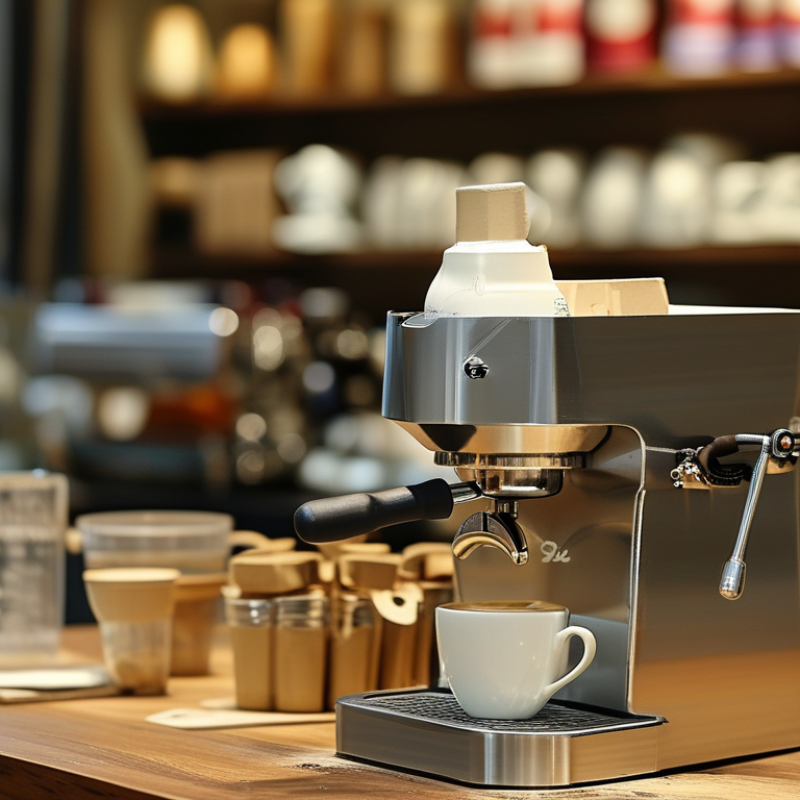
SCA’s 55–65°C milk target changes how manufacturers design commercial frothers. This range supports a smooth texture without excessive scalding. The SCA Coffee Standards identify controlled temperature as essential for consistent milk-based beverages. A frother should therefore use a responsive temperature sensor, not only a timed heating cycle. Small delays matter.
In factory evaluation, the most useful test is practical. Measure milk temperature at the pitcher center, then check foam after thirty seconds. A reliable unit should limit temperature overshoot near 65°C. It should also create fine bubbles, similar to wet paint, rather than large, fragile bubbles. Whisk speed, steam pressure, and pitcher shape must work together. That balance is often missed.
Demand makes consistency more important for global buyers. The National Coffee Association’s Spring 2024 report found that 67% of U.S. adults drank coffee during the previous day. More home users now expect café-style texture. Manufacturers should provide calibration records, food-contact material details, and repeatability data across 110–240V models. However, one test cannot represent every milk type. Oat, soy, and low-fat milk can foam differently. This remains a design weakness worth testing before bulk orders. Temperature displays may look precise, yet sensor placement can produce misleading readings.
Whisk, steam, and induction models are the common formats. Each differs in capacity, speed, heating, and control. Small differences matter.
Whisk models commonly handle 100–300 milliliters. They usually operate near 10–25 watts. Dense milk may slow the motor.
Steam models often accept 250–600 milliliters. Their heating power ranges around 400–1,200 watts. A 150-milliliter cycle may take 60–120 seconds.
Check usable capacity, measured cycle time, loaded wattage, and noise readings. Many models control temperature near 60–70°C. Labels can be optimistic.
Test videos show real heating time, foam volume, and operating noise. Catalog figures may hide weak performance. Repeated tests reveal more.
Request model-specific electrical safety reports, conformity documents, restricted-substance records, and food-contact material specifications. Similar-model reports are not enough.
Request dated factory videos, equipment lists, inspection records, and batch-level defect data. Check leakage, insulation, grounding, and temperature tests. “Passed QC” is too vague.
Confirm separate requirements for samples, tooling, production, and inspection. Trial orders may require 500 units. Custom colors can exceed 2,000 units.
Test several units under full load. Measure heating time, foam volume, motor noise, and surface temperature. Higher wattage may increase energy use.
No checklist is flawless. Scheduled visits may show unusually good results. Unannounced checks help, but they are not always possible. Leave room for uncertainty.
This guide helps global buyers evaluate Chinese Milk Frother manufacturers through performance, compliance, and supply-chain criteria. It explains how the SCA’s recommended 55–65°C milk temperature range influences heating control, foam quality, and product safety. It also compares whisk, steam, and induction frothers by capacity, operating speed, power consumption, and suitability for different commercial or household applications.
The article provides a practical framework for assessing OEM factories, including verification of IEC 60335-1, CE, RoHS, and FDA-related requirements. Buyers will learn how to review MOQ policies, 500–2,000W power options, production lead times, inspection procedures, and key QC metrics. A final scorecard compares manufacturers by total cost, warranty coverage, certification readiness, communication, and supply risk, helping importers select reliable production partners and build a more predictable purchasing strategy.

 Blossom