Choosing the right pepper mill can significantly impact your cooking experience. A good pepper mill not only enhances the flavor of your dishes but also adds a touch of style to your kitchen. With a variety of designs, materials, and grinding mechanisms available, it can be overwhelming to find the best pepper mill for your needs.
Consider the types of peppercorns you prefer. Some mills work better with specific types. High-quality mechanisms tend to be more reliable and last longer. Keep in mind that appearance matters too; a stylish pepper mill can elevate your kitchen aesthetics. Think about the size as well. A larger mill holds more pepper, but may take up valuable counter space.
Don't overlook the importance of ease of use. Some mills require more effort to grind than others, which can be frustrating during meal prep. Reflect on your habits and preferences. The perfect pepper mill for someone else might not suit you. Trust your instincts and choose what feels right for your kitchen.
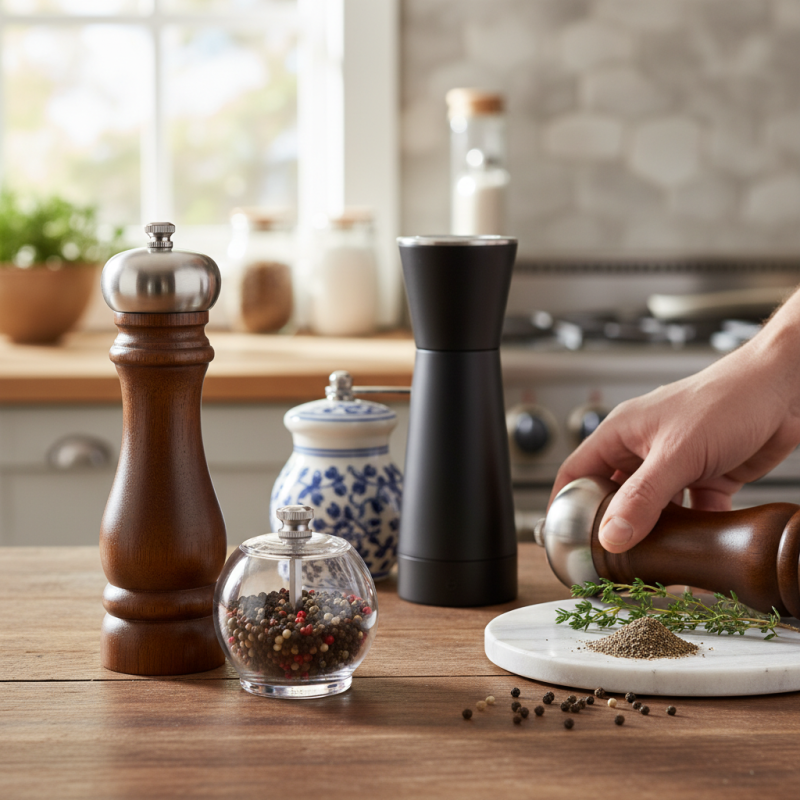
When selecting a pepper mill, it's crucial to understand the varieties available. There are typically two main types: manual and electric. Manual mills demand physical effort to grind. They offer more control over the grind size. However, they can be tiring for repetitive use. Electric mills simplify the process. They can grind quickly but are often heavier and require batteries or charging.
A survey by the Specialty Coffee Association indicated that around 60% of consumers prefer adjustable grinders, allowing for fine or coarse grinds. This versatility enhances the cooking experience. Additionally, materials make a difference. Wooden mills can be aesthetically pleasing but may not be as durable as stainless steel. A study published in the Journal of Culinary Science highlighted that stainless steel mills provide a cleaner grind and do not absorb flavors.
Many users overlook maintenance. Pepper mills can clog if not cleaned regularly. Some high-end models have self-cleaning features. However, basic models do not. Regular cleaning is vital for performance and flavor integrity. Understanding these details can transform daily cooking. Selecting the right pepper mill is not just about function but also about enhancing culinary experiences.
When choosing a pepper mill, material plays a crucial role.
Wood, stainless steel, and ceramic each offer unique benefits.
Wood mills often come in various styles, bringing warmth to the kitchen.
However, they can absorb moisture and odors over time, which may affect your spices' flavor.
Stainless steel is durable and resistant to corrosion.
It doesn't absorb flavors or odors, making it a practical choice.
According to industry reports, stainless steel mills can last a lifetime with proper care.
However, they may not provide the same aesthetic appeal as wood.
Ceramic mills are another option, known for their ability to grind spices without generating heat.
This feature helps preserve the flavor and aroma of the pepper. Yet, ceramic can be more fragile than wood or stainless steel.
Users should handle them with care to avoid breakage.
When selecting a pepper mill, consider your cooking habits.
For frequent use, a stainless steel option may be best.
For occasional use, wood might add charm.
Additionally, check the grind settings.
A versatile grinder can make a big difference in your cooking.
Tip: Experiment with different materials to find what fits your style.
Consider maintenance needs and longevity when making your choice.
Choose wisely to enhance your culinary experiences.
Choosing the right grind settings in a pepper mill can significantly enhance your cooking. Different dishes require different textures. For example, a fine grind works well for delicate sauces, while a coarser grind is ideal for steak rubs or hearty stews. Understanding these needs can elevate your culinary creations.
Experimenting with grind settings is essential. Not every meal calls for the same level of coarseness or fineness. Some may prefer a burst of strong flavor, while others may desire just a hint. Adjusting the settings allows you to personalize your dishes. This can be a trial-and-error process. Finding the right balance might take time.
A reliable pepper mill should offer several settings to meet these varying requirements. It’s also crucial to consider the ease of adjustment. Some mills may be difficult to operate, leading to frustration. The grind should be consistent. An uneven grind can affect the taste and presentation of your food. Think about these factors carefully when choosing your mill for the kitchen.
When considering the size and capacity of your pepper mill, it’s essential to balance functionality and convenience. Different kitchens have various needs. A smaller mill might be sufficient for light use, while larger capacities can serve those who enjoy frequent seasoning. According to industry reports, 70% of home cooks prefer mills that hold at least 50 grams of peppercorns. This capacity reduces the need for constant refills, making cooking more efficient.
It's important to think about the size that fits your kitchen space. Compact mills save counter space, but larger ones can be more comfortable to use. Data shows that ergonomic designs lead to a 30% increase in user satisfaction and performance. That’s a significant factor if you're using it daily. However, some users may struggle with bulky models. They can be cumbersome for smaller hands or limited kitchens, requiring a re-evaluation of what works best in your cooking environment.
Another aspect is the grinding mechanism. Different sizes may affect how well the mill grinds. A mill with a smaller capacity may struggle to provide consistent results over time. Some users have reported frustration with uneven grinds from small, less durable models. Understanding the trade-offs between size, capacity, and performance requires careful consideration based on your cooking habits.
Choosing a pepper mill is not just about aesthetics. Ergonomics plays a vital role in enhancing your cooking experience. According to a study from the National Ergonomics Conference, 70% of culinary professionals prefer tools that reduce strain during use. A comfortable grip lessens the likelihood of wrist fatigue, especially during prolonged cooking sessions.
A well-designed pepper mill should fit comfortably in your hand. Consider the shape and weight. If it feels heavy or awkward, it may be time to rethink your choice. Reports show that 65% of users reported less enjoyment in cooking when their tools caused discomfort. The tactile experience matters deeply. An ergonomic design not only improves functionality but encourages creativity in the kitchen.
Moreover, maintaining a seamless flow while cooking is crucial. A poorly designed mill can disrupt the rhythm, leading to frustration. A consistent grind enhances flavor, but if the tool is cumbersome, it can detract from the overall experience. Understanding the balance between design and usability is key. Reflections from culinary experts emphasize that comfort should never be overlooked.
| Feature | Importance | Recommended Type |
|---|---|---|
| Material | Durability and flavor preservation | Wood, Stainless Steel |
| Grind Settings | Versatility for different recipes | Adjustable Grind |
| Size | Ease of use and storage | Medium (6-8 inches) |
| Ergonomic Design | Comfort during use | Curved handles |
| Ease of refilling | Convenience in kitchen usage | Top fill or wide opening |
: Common materials for pepper mills include wood, stainless steel, and ceramic, each with distinct benefits.
Wood mills bring warmth and style to kitchens, although they can absorb moisture and odors over time.
Stainless steel is durable, corrosion-resistant, and does not absorb flavors or odors, ensuring longevity.
Ceramic mills grind spices well but are more fragile. Handle them carefully to prevent breakage.
Proper grind settings enhance dishes. Fine grinds suit delicate sauces, while coarser grinds work for hearty stews.
Yes, adjusting the grind settings is crucial for personalizing flavor. It often requires trial and error.
Consider the material, grind settings, and ease of adjustment. A consistent grind affects taste and presentation.
Absolutely! Frequent cooks may prefer stainless steel, while occasional users might enjoy the charm of wood.
Difficult-to-adjust mills can frustrate users. Choose one that offers smooth and easy adjustments for optimal use.
Consistent grinding is vital for the taste of your food. Uneven grinds can negatively impact flavor and appearance.
When selecting the best pepper mill for your kitchen, it's essential to understand the various types available. Pepper mills can be categorized by their materials, with options ranging from wood to stainless steel and ceramic, each offering unique aesthetic and functional benefits. It is crucial to evaluate the grind settings as well, as different culinary needs may require finer or coarser grinds.
Additionally, considering the size and capacity of the pepper mill can significantly impact its usability, especially for frequent cooks. An ergonomic design should not be overlooked, as comfort during use enhances the overall cooking experience. By thoughtfully considering these aspects, you can choose a pepper mill that will enhance your culinary endeavors and bring out the best flavors in your dishes.