Top 10 Smoothie Blender Tips for Perfect Blends Every Time?

Time:2026-06-10 Author:Oliver
0%

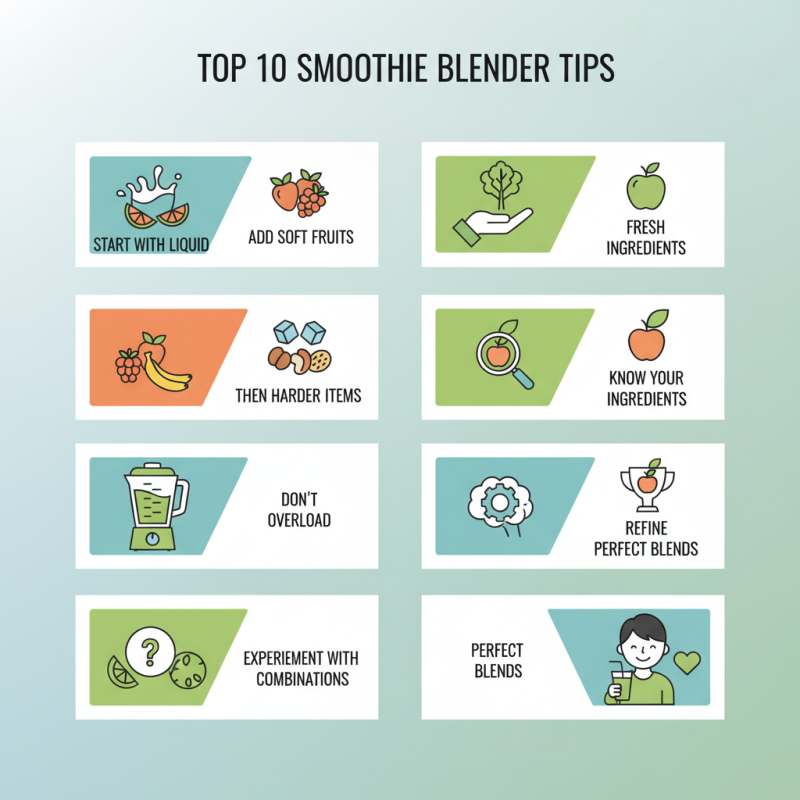
Creating the perfect smoothie can be both an art and a science. A reliable smoothie blender serves as your best ally. Whether you're a beginner or a seasoned pro, certain tips can vastly improve your blending experience. Achieving that ideal texture and flavor requires skill, but it’s not impossible.

Knowing your ingredients is key. Fresh fruits and vegetables can significantly enhance your blend. However, overloading your smoothie blender can lead to unsatisfactory results. It’s essential to layer your ingredients properly. Start with liquid, then add soft fruits, followed by harder items. This order makes for a smoother blend.

Don’t hesitate to experiment with different combinations. You may find that some ingredients don’t work well together. It’s all part of the learning process. Each imperfect blend offers valuable insights into your preferences. Investing time to refine these techniques will ensure that every smoothie meets your standards. Enjoy the process of creating delicious, healthy drinks with your trusty smoothie blender.
Top 10 Smoothie Blender Tips for Perfect Blends Every Time?

Top 10 Essential Ingredients for Optimal Smoothie Nutritional Value

When crafting the perfect smoothie, it’s essential to prioritize key ingredients that enhance nutritional value. Leafy greens, such as spinach or kale, add vitamins without overwhelming taste. They blend easily and provide fiber. Fruits like bananas and berries are not only delicious but also rich in antioxidants. Carefully selecting ripe fruits contributes to natural sweetness.

Consider incorporating protein sources like Greek yogurt or nut butters to create a balanced drink. These ingredients help with satiety and muscle repair. Adding chia seeds or flaxseeds can boost omega-3 intake. They provide healthy fats, which are often overlooked in smoothies.

Remember to experiment with textures. Some may prefer a thicker smoothie, while others like a more liquid consistency. It’s okay to make mistakes along the way. Perhaps a blend is too tart or too thin. These moments lead to a better understanding of personal tastes. Explore different combinations to find what truly satisfies. The journey to the ideal smoothie can be just as enjoyable as the drink itself.

Understanding Blender Types: Choosing the Right One for Your Needs

Choosing the right blender is essential for achieving perfect blends. With various types available, it's easy to feel overwhelmed. According to a recent industry report by the International Housewares Association, more than 40% of consumers struggle with selecting the right kitchen appliances that suit their needs.

Consider your blending habits. For smoothies, high-performance blenders are ideal. They can handle tough ingredients like ice and frozen fruits efficiently. A report from the American Culinary Federation indicates that 65% of professional chefs prefer high-speed blenders for their consistent results. However, not everyone needs such power. For occasional use, a basic handheld or compact blender may suffice. They are typically more affordable and easier to store.

Pay attention to the features. Variable speed controls and different blade designs can significantly impact blending quality. Yet, many users overlook these factors. A survey conducted by the Kitchen Appliance Association revealed that 30% of buyers did not consider blender design and power before purchasing. Reflect on your specific needs to avoid buyer's remorse. Check if you really need a multi-function device or just a simple, reliable blender for smoothies.

The Importance of Layering Ingredients for Smooth Consistency

Layering ingredients properly in your smoothie can greatly influence the final texture and flavor. Research from culinary experts suggests that the order of ingredients matters. For instance, placing liquids at the bottom allows for better blending. This ensures that the blades move freely, processing the solids more efficiently.

Consider using dense ingredients like frozen fruits or vegetables at the base. They can cause blending issues if placed on top. A study from the American Dietetic Association indicates that achieving a smooth consistency can improve the overall nutrient absorption in smoothies. When ingredients are well blended, vitamins and minerals are more bioavailable.

However, it's easy to overlook this layering technique. Many people throw ingredients in without consideration. This can lead to unblended chunks or a watery mix. According to the Food Processing Industry, 30% of smoothie enthusiasts report dissatisfaction with texture. Experimenting with layering can lead to smoother results. Aim for a mix of frozen and fresh items while maintaining a balanced approach to ingredient ratios.

Blending Techniques: Speed and Duration for Perfect Texture

When making smoothies, blending speed and duration play a crucial role in achieving the perfect texture. Start by understanding your ingredients. Soft fruits, like bananas, blend faster than harder ones, such as carrots. A slow start can help break down tougher components before ramping up the speed. This technique prevents ingredients from clumping together and ensures an even mixture.

Consider blending in stages. Begin with a short pulse at low speed. Gradually increase the speed for 30 seconds to 1 minute. This method allows you to monitor the consistency, ensuring a smooth blend. If it's too thick or chunky, stop the blender and scrape down the sides. Adjusting the speed and blending time based on your mixture can prevent over-processing, which can lead to a watery texture.

Not every blend will come out perfect at first. Sometimes, you'll find that the smoothie lacks that creamy feel. This could be due to too little liquid or blending too long. Reflect on the outcomes. Adjusting your technique is key. After a few attempts, you'll discover what speeds and durations work best for you. Embrace the trial and error—it’s all part of the blending journey.

Cleaning and Maintenance Tips for Longevity of Your Blender

When it comes to your blender, cleaning and maintenance are crucial. Dirty blenders harbor bacteria. Ensure you clean your blender immediately after use. A quick rinse with warm water helps. For tougher stains, a mix of warm water and soap works wonders. Don’t forget to disassemble parts for better access.

Regular maintenance extends your blender's life. Inspect the blades for wear. If they seem dull, replace them. Tighten any loose screws or parts. This simple step can prevent larger issues later. It’s also wise to check the cord for frays or damage.

Keep your blender in a dry area. Moisture can lead to mold. Store it with the lid off to allow airflow. Avoid storage in damp places like under the sink. Remember, a little care goes a long way in ensuring perfect blends each time.

FAQS

: What are essential ingredients for a nutritious smoothie?

: Leafy greens like spinach and kale enhance nutrition without overwhelming taste. Fruits add antioxidants and sweetness.

How can I improve the protein content of my smoothie?

Incorporate Greek yogurt or nut butters. They help with staying full and muscle repair after workouts.

What should I consider when choosing a blender?

Think about your blending habits. High-performance blenders are best for tough ingredients; compact ones work for light use.

Why is it important to layer ingredients in a smoothie?

Layering aids blending efficiency. Liquids should go at the bottom for smoother consistency and better nutrient absorption.

What if my smoothie texture isn't as expected?

It's okay to encounter issues. Experimenting with different layers can improve texture over time.

Are all blenders equal for making smoothies?

No, features matter. Variable speed controls can impact blending quality. Reflect on your specific needs before purchasing.

What is a common mistake when making smoothies?

Many people don’t layer ingredients properly. This can cause unblended chunks or a too-thin mix.

How do I balance flavors in my smoothie?

Ripe fruits add natural sweetness. Combining different fruits can lead to more satisfying results.

Can I use frozen ingredients in my smoothie?

Yes, but consider their placement. Dense frozen items should be layered correctly to avoid blending issues.

How can I learn what I like in a smoothie?

Taste testing is key. Don't be afraid of mistakes; they help refine your preferences and enhance your smoothie-making skills.

Conclusion

In the quest for the perfect smoothie, understanding the optimal use of a smoothie blender is crucial. This article outlines the top 10 essential ingredients that enhance nutritional value, ensuring that each blend is both delicious and healthy. Choosing the right blender type is paramount, as different models cater to various needs and preferences.

Layering ingredients properly plays a significant role in achieving a smooth consistency, while mastering blending techniques—considering speed and duration—can elevate the texture of your smoothies. Additionally, regular cleaning and maintenance of your smoothie blender will prolong its life and performance. By implementing these tips, you can enjoy perfect blends every time, making your smoothie experience both enjoyable and nutritious.


Oliver

Oliver

Oliver is a seasoned marketing professional with a wealth of expertise in driving brand awareness and engagement. With a deep understanding of our company's product offerings, he consistently delivers high-quality content that enriches our professional blog. His insights not only shed light on......