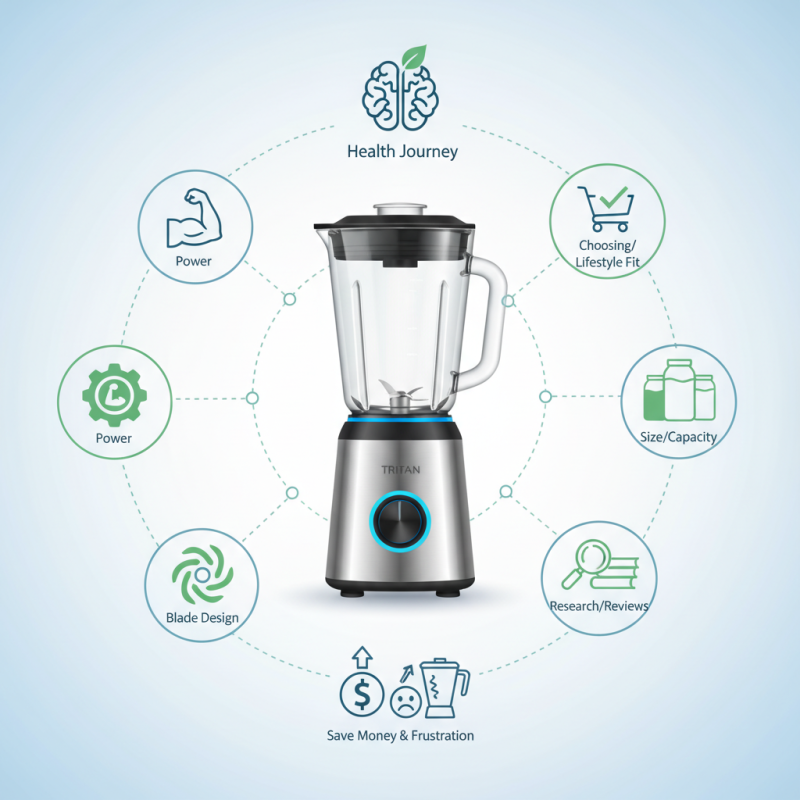
When it comes to choosing the best smoothie blender, expert advice is invaluable. As John Smith, a leading culinary expert and author, states, “The right smoothie blender can transform your health journey.” A high-quality Smoothie Blender not only creates delicious drinks but also promotes healthier choices.
Selecting the ideal Smoothie Blender requires consideration of several factors. Power is crucial; a stronger motor can blend even the toughest ingredients smoothly. Blade design also matters for achieving the perfect consistency. Users often overlook these details, leading to unsatisfactory results. A reliable product will last and deliver on its promises.
Investing time in research can save money and frustration. Reading reviews helps identify top brands in the market. Choosing an appropriate size is essential for your kitchen needs. Not all blenders suit every lifestyle, and making this choice can be challenging. Each buyer's journey is unique, filled with reflections on preferences and usability.
Understanding the Categories of Smoothie Blenders Available
When selecting a smoothie blender, it’s essential to understand the categories available. Smoothie blenders typically fall into three main types: personal blenders, traditional blenders, and high-performance blenders. Each category caters to different needs and preferences.
Personal blenders are compact and easy to use. They are great for on-the-go smoothies. However, their smaller capacity may not meet the needs of larger families. Meanwhile, traditional blenders offer a balance of power and versatility. They can handle ice and frozen fruits, making them a popular choice for everyday users. Yet, some may find them a bit bulky on the kitchen counter.
High-performance blenders are designed for serious enthusiasts. They excel in blending tough ingredients, providing a silky texture. But, their higher price point may be a concern for some. Users should reflect on their blending habits and budget. Choosing the right blender can enhance your smoothie-making experience, but it requires thoughtful consideration.
Top Tips for Choosing the Best Smoothie Blender
This chart provides an overview of essential features to consider when choosing a smoothie blender. It includes measurements for power, capacity, price, speed settings, and warranty duration, helping you make an informed decision.
Key Features to Look for in a Smoothie Blender
When choosing a smoothie blender, key features play a crucial role.
Power is essential. A blender with at least
500 watts ensures smooth blends, even for tough ingredients. Blade design also matters.
Look for stainless steel blades that
can crush ice and blend greens thoroughly. A low-speed setting allows better control, making it easier
to create the perfect texture.
Consider the size and capacity of the blender. A larger jug is great for families, while smaller models save space for singles.
Easy cleaning is often overlooked.
Removable blades and dishwasher-safe components can save you time.
Noise levels can be a concern, too. Some blenders are quieter than others, which might be important if you blend early in the morning.
It’s wise to read reviews, as real user experiences reveal a lot about durability and performance.
However, remember that even the best models might struggle with certain ingredients, like frozen fruits. Be ready to adapt your recipes.
Choosing a blender is a personal journey. Each feature contributes to
your needs and blending habits. Take your time in making the right decision.
Evaluating Power and Performance Ratings of Blenders
When evaluating smoothie blenders, power is a key factor. A blender with at least 500 watts is essential for handling frozen fruits and leafy greens. Industry reports suggest that higher wattage offers quicker blending times and smoother textures. For instance, a study showed that blenders with 1000 watts or more can prepare smoothies in under 30 seconds. This speed can be crucial for busy mornings.
Performance ratings also play a significant role in your choice. Look for blenders with multiple speed settings. This feature allows for more control over blending consistency. A report from a culinary institute found that blenders with variable speeds produce more consistent results across different ingredients. Furthermore, durable blades, like stainless steel, can significantly enhance performance and longevity. A good quality blade ensures that ingredients are well-mixed without losing nutritional value.
Be aware that more power often leads to increased noise levels. Many users find high-wattage blenders disruptive. It's essential to consider your kitchen environment. Lower wattage options can be quieter but may struggle with tougher ingredients. This trade-off can affect your overall blending experience. Balancing power, noise, and performance is vital for making the best choice.
Assessing Blender Capacity and Size for Your Needs
When selecting a smoothie blender, assessing capacity and size is crucial. Most blenders range from 20 to 64 ounces. If you often make smoothies for one or two people, a smaller capacity is usually sufficient. However, families or meal preppers might prefer larger options. The versatility of size extends beyond just quantity; it influences blending efficiency. A smaller container can create more powerful vortexes, resulting in smoother textures.
According to a recent report by the International Food and Beverage Association, the capacity directly affects consumer satisfaction. Blenders with capacities around 32 ounces are the most popular among users, achieving a good balance between size and practicality. Large blenders, while tempting, can be cumbersome to store and clean. You must weigh your kitchen space against your blending needs.
It's essential to think about how often you'll use your blender. A family might benefit from larger models, but an individual could find it challenging to justify the space they take up. Consumer behavior research indicates that users who have limited kitchen space often report frustration when using oversized appliances. Reflecting on your lifestyle can lead to a more satisfying blender choice.
Comparing Price Ranges and Brands for Quality Choices
When choosing a smoothie blender, price plays a significant role. Research shows that high-quality blenders typically range from $100 to $600. Many affordable options under $100 exist, but they often lack durability. A study by Consumer Reports indicates that durability is crucial for long-term satisfaction. Cheaper blenders may break down or fail to blend effectively over time.
In the realm of quality, brand reputation can guide buyers. Research shows that consumers often prioritize brand trustworthiness. A report from the Home Appliance Manufacturers Association highlights that reputable brands invest heavily in innovation. This ensures better performance and longevity. A reliable blender can create smoother textures, which is essential for health-focused users.
It is also wise to consider product reviews. Many online platforms collect consumer feedback. A review with a mix of positive and negative experiences can provide deeper insights. Some users may find that their blenders do not meet expectations. Often, they wish they had spent more for increased performance. Balancing cost and quality is challenging, but understanding these factors can enhance your purchase experience.
FAQS
: There are three main types: personal blenders, traditional blenders, and high-performance blenders. Each serves different needs.
Personal blenders are compact and great for on-the-go smoothies. However, they may not suit larger families.
Traditional blenders are versatile and can handle ice. Yet, they can be bulky on the kitchen counter.
High-performance blenders blend tough ingredients well. However, they come with a higher price tag that some may find concerning.
A blender with at least 500 watts is key for frozen fruits. Higher wattage means quicker blending and smoother textures.
Blenders with variable speeds provide more control. They produce consistent results across different ingredients.
Yes, higher wattage increases noise. Lower wattage options are quieter, but may struggle with tougher ingredients.
Quality blenders typically range from $100 to $600. Cheaper options may lack durability and effectiveness.
Trustworthy brands are often more reliable. They invest in better performance and innovation for long-term satisfaction.
Reviews provide insights from other users. Mixes of feedback can help identify if a blender meets expectations or not.
Conclusion
When selecting the best smoothie blender, it's crucial to understand the various categories available, which can significantly influence your choice. Key features to consider include blade design, ease of cleaning, and the presence of preset functions tailored for smoothies. Additionally, evaluating the power and performance ratings will help ensure that the blender can handle tough ingredients and deliver a smooth consistency.
Capacity and size are also important factors to match your personal needs, especially if you're blending for one or for a family. Finally, comparing price ranges and quality across different brands will help you make an informed decision without compromising on performance. By focusing on these aspects, you can find a smoothie blender that perfectly suits your lifestyle and blending preferences.

 Blossom