Top Automatic Milk Frother Manufacturers for Global Buyers?

Time:2026-09-23 Author:Sienna
0%

Choosing the right Automatic Milk Frother is more complex than comparing prices or polished product photos. Global buyers must assess manufacturing consistency, heating performance, foam texture, and after-sales support. A reliable supplier should also provide clear specifications, test records, and stable communication across different time zones.

In this guide, we examine leading automatic milk frother manufacturers from a practical purchasing perspective. Key details include stainless-steel jug quality, usable capacity, temperature control, motor noise, cleaning design, and expected service life. For example, a 350-millilitre model may suit cafés with limited counter space, while larger units support hotel breakfast stations. Buyers should also confirm voltage options, plug standards, packaging strength, and documentation before placing bulk orders.

Small details matter.

Manufacturer reputation is only one part of the decision. Factory audits, sample testing, warranty terms, and replacement-part availability can reveal more than marketing claims. We consider suppliers serving private-label brands, distributors, hospitality groups, and household appliance retailers. However, no ranking is flawless. Product quality can change between production batches, and online information may become outdated. That is why independent verification remains essential. This overview aims to help international buyers compare manufacturers with greater confidence, while recognizing that the best choice depends on budget, sales channel, compliance needs, and customer expectations. A dependable Automatic Milk Frother should create consistent foam, operate safely, and remain practical after months of daily use.
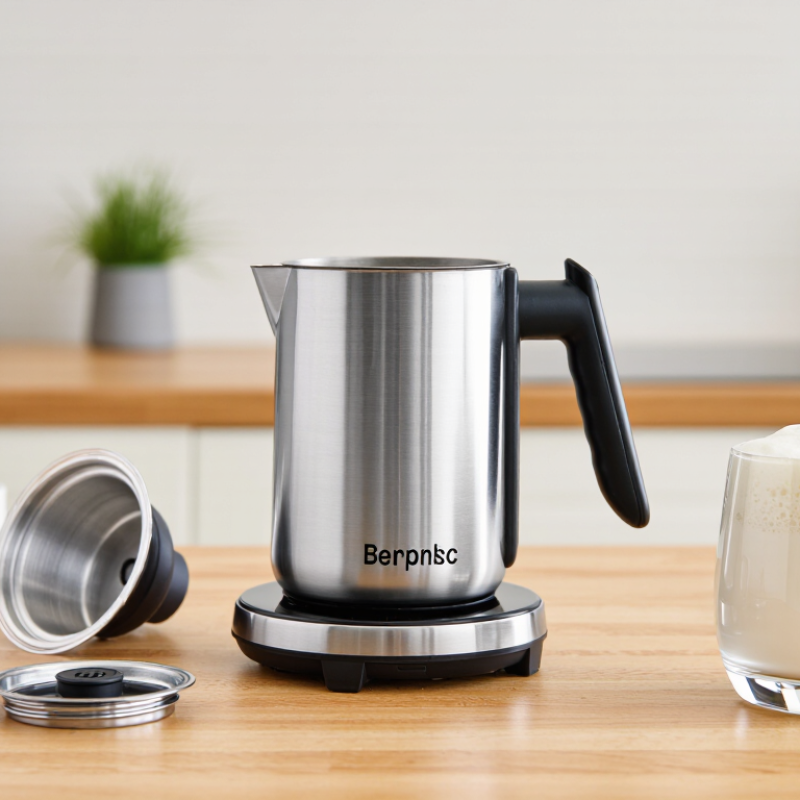
Top Automatic Milk Frother Manufacturers for Global Buyers?

How Automatic Milk Frothers Work and What Global Buyers Need

Automatic milk frothers combine controlled heating with mechanical whisking. A small motor spins a coil or disk, drawing air into the milk and forming a fine foam. An internal heating element raises the temperature gradually. Sensors then stop the cycle near the selected setting.

For global buyers, this mechanism affects consistency, safety, and operating cost. A reliable unit should maintain stable temperature without scorching the milk. It should also produce foam with small, even bubbles. In practical testing, cold milk usually needs more time than room-temperature milk. Plant-based liquids can behave differently. Some create firm foam, while others remain thin.

Voltage compatibility matters. Buyers should confirm electrical ratings, plug options, and required certifications for each market. Food-contact materials need clear documentation and easy cleaning. Removable whisks, smooth interiors, and dishwasher-safe parts can reduce maintenance problems. Capacity also deserves attention. A compact model may suit cafés with limited counter space, but it may slow service during busy periods. Warranty terms, spare-part access, and factory quality records reveal more than attractive specifications.

No machine is perfect. Overfilled containers may spill, and delicate foam can collapse after several minutes. This is easy to overlook. Buyers should request sample testing with local milk types, measure heating accuracy, and inspect noise levels during operation. A capable manufacturer should explain these limits clearly, not promise identical results in every kitchen.

Key Criteria for Evaluating Automatic Milk Frother Manufacturers

When evaluating automatic milk frother manufacturers, begin with product safety and engineering evidence. Ask for food-contact material reports, electrical safety certifications, and temperature-control test results. Stainless steel should resist staining, while internal seals must tolerate repeated heating cycles. Request samples before discussing large orders. Foam consistency matters more than attractive product photos.

A reliable manufacturer should explain its production process clearly. Check whether it controls motor assembly, heating elements, and final testing in-house. Factory audits can reveal storage conditions, calibration records, and worker training. Ask for batch traceability and inspection standards. Small details matter. For example, does the unit stop heating when the milk reaches the target temperature? Does the whisk remain stable during use? A detailed answer shows practical knowledge, not just sales language.

Capacity and communication also deserve careful review. Compare stated output with real lead times, minimum order quantities, packaging protection, and spare-part availability. Manufacturers serving global buyers should understand plug types, labeling rules, and shipping documentation. Yet paperwork alone is not enough. A polished factory profile can hide weak after-sales support. I would test response times with technical questions and record every promise. My own evaluation may still miss hidden production risks, especially during peak seasons. Independent inspections and repeated sample testing reduce that uncertainty.

Top Automatic Milk Frother Manufacturers for Global Buyers? - Key Criteria for Evaluating Automatic Milk Frother Manufacturers

Evaluation Dimension What Global Buyers Should Evaluate Recommended Evidence or Test Data Practical Purchasing Benchmark Suggested Weight
Product Safety Compliance Confirm that the product design, electrical system, heating element, insulation and controls meet the requirements of the destination market. Applicable test reports, technical files, declarations of conformity and market-specific certification records. Evidence should match the exact model, rated voltage, plug type and production version supplied to the buyer. 15%
Applicable Electrical Standards Household milk frothers commonly fall within the scope of safety requirements for household and similar electrical appliances. Assessment against IEC 60335-1 and, where applicable, IEC 60335-2-15 for appliances intended for heating liquids. The manufacturer should identify the exact standard edition and explain any national deviations required by the destination country. 8%
Food-Contact Materials Milk-contact surfaces must be made from materials suitable for repeated food contact and normal operating temperatures. Material declarations, migration test reports and supplier documentation for the vessel, whisk, seals and coatings. For the European market, verify compliance with Regulation (EC) No 1935/2004 and applicable food-contact good manufacturing practice requirements. 10%
Heating and Frothing Performance Assess heating consistency, foam structure, cycle repeatability and performance with different milk types. Independent tests using defined milk volume, starting temperature, fat content, cycle mode and measurement method. Require a documented test protocol rather than relying only on marketing claims such as “dense foam” or “fast heating.” 12%
Temperature Control Stable temperature control helps reduce scorching, improve beverage consistency and protect milk quality during operation. Temperature readings at the end of each cycle, sensor calibration records and over-temperature protection test results. The supplier should state the control method, tolerance and temperature measurement location for every automatic program. 8%
Capacity and Usable Fill Volume Frothing capacity is normally lower than heating-only capacity because foam expands during operation. Separate rated capacities for frothing and heating, supported by dimensional drawings and actual fill-line markings. Capacity claims should clearly distinguish minimum and maximum fill levels and should include overflow protection details. 7%
Cleaning and Hygienic Design Milk residue can accumulate around whisks, seals, lids and vessel joints, so cleanability directly affects product safety and user satisfaction. Cleaning instructions, removable-component list, residue inspection results and dishwasher-use limitations. Prefer smooth milk-contact surfaces, accessible components and clear instructions identifying parts that must not be immersed. 12%
Durability and Life-Cycle Testing Repeated heating, cooling, motor starts and washing can stress the vessel, whisk, seals, electronics and surface coatings. Cycle-test plan, failure-rate records, accelerated life-test results and inspection criteria for key components. Request test conditions and pass/fail criteria; a cycle count without test details is not sufficient for comparison. 10%
Quality Management System A controlled quality system supports consistent production, traceability, corrective action and inspection management. Current ISO 9001 certificate, incoming-material controls, in-process inspection records and final inspection procedures. Verify certificate scope, validity, manufacturing site and whether the certificate covers the actual product category. 8%
Electrical Compatibility Voltage, frequency, plug configuration, power rating and protection design must match the intended sales market. Rating-label artwork, wiring diagrams, plug approvals and electrical test results for each regional version. Do not treat a plug adapter as a substitute for a correctly rated regional product. 6%
Supply Capacity and Lead Time The supplier should be able to support forecasted demand, seasonal peaks, spare parts and stable production scheduling. Production capacity statement, historical on-time delivery data, stated MOQ, lead-time range and contingency plan. Compare confirmed lead times with purchase-order dates and require written notice procedures for delays or material changes. 5%
After-Sales and Spare Parts Whisks, seals, lids, heating vessels and control components may determine the practical service life of the product. Spare-parts list, warranty terms, repair instructions, response-time commitment and parts availability period. Select suppliers that provide model-specific service documentation and stable replacement-part identification. 5%
Sustainability and Regulatory Materials Control Material restrictions, packaging choices and product energy use can affect import approval, retailer requirements and long-term operating cost. RoHS and REACH declarations where applicable, packaging specifications, recyclability information and standby-power test data. Require updated declarations for design or component changes and ensure packaging information matches the destination-market rules. 4%
Total Suggested Evaluation Weight 100%

Note: Benchmarks are buyer evaluation guidelines, not universal legal requirements. Final compliance obligations depend on the destination country, product configuration and applicable standards.

Leading Manufacturers and Their Product Strengths

Top Automatic Milk Frother Manufacturers for Global Buyers?

Leading automatic milk frother manufacturers usually compete through heating control, foam consistency, and production reliability. In supplier evaluations, I look beyond polished product photos. A strong manufacturer should provide repeatable test data, clear material specifications, and stable batch quality.

Consistency matters. Some manufacturers use precise temperature sensors to reduce scorching and preserve milk texture. Others focus on powerful magnetic whisk systems, creating dense foam within two minutes.

Manufacturers with broad engineering teams often offer several heating modes, removable containers, and automatic shutoff functions.

These features support cafés, hotels, offices, and home kitchens. Stainless steel interiors are easier to clean and resist odor retention. However, a glossy finish does not prove long-term durability. Buyers should inspect cycle testing, motor noise, seal quality, and replacement-part availability. That sounds simple. It is not.

Manufacturers serving global buyers may also provide multilingual manuals, export packaging, and responsive technical support. Reliable suppliers explain electrical ratings clearly and adapt plugs to regional requirements.

They should disclose food-contact materials and provide inspection records from recognized testing bodies. I would still request samples before placing a large order. One sample can hide production variation.

Factory audits, video inspections, and independent quality checks add useful evidence. The best supplier is not always the cheapest or the most advanced. It is the one whose performance remains dependable after repeated daily use.

Customization, Certifications, and Export Capabilities

Global buyers should assess automatic milk frother manufacturers beyond product photos and low quotations. According to Mordor Intelligence’s 2025 Coffee Machine Market report, the sector is expected to grow at over 6% annually through 2030. This growth increases demand for adaptable equipment, but supplier quality remains uneven. Customization should cover heating temperature, foam density, cup volume, voltage, plug type, and control-panel language. A manufacturer should also provide trial samples, CAD drawings, and repeatable test results. Details matter.

Certifications require closer inspection. For European shipments, buyers commonly request CE documentation, RoHS compliance, REACH statements, and food-contact declarations under Regulation (EC) No 1935/2004. For North American sales, materials and electrical safety should align with applicable FDA and recognized testing requirements. A certificate alone is not enough. Verify its issuing laboratory, product model, test scope, and validity date. I have seen specifications change after sampling. That gap matters.

Export capability is equally practical. The supplier should explain carton dimensions, pallet loading, HS codes, Incoterms, lead times, and spare-part support. Intertek’s 2024 global supply-chain research continues to highlight traceability and supplier transparency as key purchasing concerns. Ask for production photos, inspection records, and failure-rate data. Numbers can be selective. Independent pre-shipment inspection is wiser. Manufacturers that document corrective actions usually deserve more confidence than those promising “zero defects.” I would still test long-term heating performance, because laboratory results may not reflect a busy café.

How to Compare Suppliers and Select the Right Partner

Choosing an automatic milk frother supplier requires more than comparing catalog prices. Experienced buyers inspect production capacity, food-contact materials, heating controls, and quality records. A clean factory floor is useful evidence, but it is not proof. Ask for recent inspection reports and production photographs.

Request samples from several manufacturers. Test the same milk volume, temperature, and recipe for every sample. Measure foam texture, heating time, noise, and cleaning effort. Run repeated cycles to reveal weak motors or unstable temperature controls. Small details matter. Does the lid seal properly? Can staff remove residue without special tools? Supplier answers should be specific, supported by test data, and easy to verify. Vague promises deserve caution.

Review the supplier’s warranty process, spare-part availability, minimum order quantity, and production lead time. Confirm whether food-contact declarations and electrical safety documents fit your target markets. A capable partner should explain traceability from incoming materials to final inspection. Communication speed also matters when packaging artwork or technical changes arise. Do not choose the lowest quotation automatically; unusually low pricing may hide thinner materials or limited testing. A pilot order can expose problems before a large commitment. Even careful evaluations can miss issues, especially when factory visits are brief, so keep written acceptance criteria and independent inspections in the purchasing plan.

Top Automatic Milk Frother Manufacturers for Global Buyers

How to Compare Suppliers and Select the Right Partner

This buyer-weighted scorecard assigns 100 total points to the criteria most relevant when evaluating automatic milk frother manufacturers. Product safety and regulatory compliance receive the highest weighting, followed by frothing consistency, production capability, order flexibility, delivery performance, quality management, and after-sales support. Buyers can adjust these weights according to market requirements, order volume, and target regions.

FAQS

What should buyers check beyond product photos and low prices?

Check customization, test records, production capacity, and food-contact materials. A clean factory helps, but it proves little alone.

Which product features can manufacturers customize?

Common options include heating temperature, foam density, cup volume, voltage, plug type, and control-panel language. Details matter.

Should buyers request samples before placing a large order?

Yes. Request samples from several suppliers and test equal milk volumes, temperatures, and recipes. A pilot order can reveal hidden problems.

How should milk frother samples be tested?

Measure heating time, foam texture, noise, and cleaning effort. Repeat several cycles. Weak motors may appear later.

What certification documents should buyers verify?

Verify food-contact declarations, material compliance, and electrical safety documents for each target market. Check the model, test scope, laboratory, and validity date.

Is a certificate alone enough?

No. Specifications may change after sampling. Match the certificate with the actual product and recent inspection records.

What export details should a supplier provide?

Ask for carton dimensions, pallet loading, customs classification, trade terms, lead times, and spare-part support. Written details reduce surprises.

How can buyers judge a supplier’s quality control?

Request production photos, inspection records, traceability details, and failure-rate data. Independent pre-shipment inspection is wiser than trusting “zero defects.”

What should buyers inspect during repeated cleaning and heating?

Check lid sealing, residue removal, temperature stability, and long-term heating performance. Busy café use may expose issues that laboratory tests miss.

Is the lowest quotation the best choice?

Not automatically. Very low pricing may reflect thinner materials or limited testing. I might still miss something, so keep written acceptance criteria.

Conclusion

Choosing the right Automatic Milk Frother manufacturer requires more than comparing prices. Global buyers should first understand how these appliances heat and aerate milk, including key factors such as temperature control, frothing consistency, capacity, safety features, cleaning convenience, and energy efficiency. A reliable manufacturer should demonstrate stable production quality, thoughtful product design, and strong quality management throughout the manufacturing process.

When evaluating potential suppliers, buyers should also consider customization options, packaging support, certifications required for target markets, production capacity, lead times, warranty policies, and export experience. Manufacturers with flexible product development capabilities can better support different voltage requirements, materials, functions, and private-label needs. A practical comparison should review samples, technical specifications, quality inspection procedures, communication efficiency, and total purchasing costs rather than focusing only on the lowest quotation. By assessing both product strengths and long-term cooperation capabilities, global buyers can select a dependable partner that supports consistent quality, market compliance, and sustainable business growth.


Sienna

Sienna

Sienna is a skilled marketing professional with a deep expertise in our company’s core products and services. With a passion for innovation and detail, she plays a pivotal role in crafting insightful blog posts that not only highlight the unique features of our offerings but also provide valuable......